Rheumatology & Clinical Immunology · Ravet, Pimpri-Chinchwad
Expert care for arthritis, autoimmune and joint disease
Dr. Abhijeet Bhosikar — MBBS, MD (General Medicine), DNB (General Medicine), FCIR — is a Consultant Physician and Rheumatologist with 7+ years treating rheumatoid arthritis, lupus, gout, ankylosing spondylitis and complex autoimmune disease. Accurate diagnosis first, then a personalised, evidence-based plan you actually understand.
- Years in clinical rheumatology
- 7+Years in clinical rheumatology
- Rheumatic conditions managed
- 17Rheumatic conditions managed
- Languages spoken in clinic
- 3Languages spoken in clinic
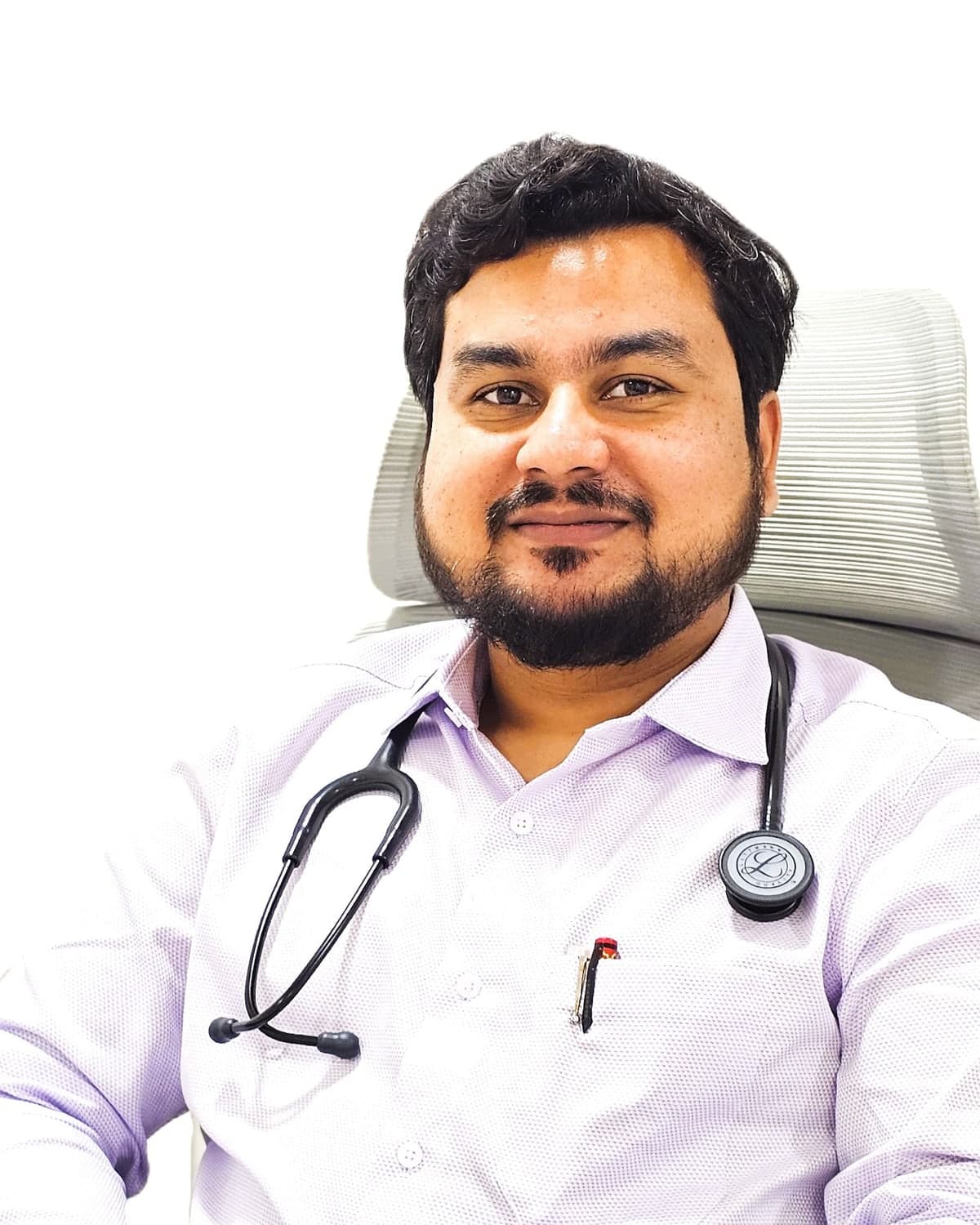
Dr. Abhijeet Bhosikar
Consultant Physician & Rheumatologist
Qualifications
- MBBS
- MD
- DNB
- FCIR
5.0 from 10 reviews on Google Business Profile
Three ways to consult
Choose how you want to be seen
Not every problem needs the same kind of visit. A newly swollen joint needs examining in person; a stable follow-up rarely does.
- See clinic address →
Walk in to the clinic
Rheumatology OPD runs Monday, Wednesday and Friday, 11 AM to 3 PM at the Ravet clinic. Calling ahead is advised so you are not left waiting.
- Call the clinic →
Book by phone or WhatsApp
The quickest way to get a slot. Describe the symptoms briefly and reception will tell you whether a rheumatology consultation is the right next step.
- Request a video consult →
Video teleconsultation
For follow-up, report interpretation and dose adjustment when travelling in is impractical. First visits are best in person, since diagnosis depends on examining the joints.
7+
Years in practice
5.0
Google rating · 10 reviews
Meet the doctor
Dr. Abhijeet Bhosikar
Dr. Bhosikar is a Consultant Physician and Rheumatologist providing expert medical care for joint pain, autoimmune disease and chronic lifestyle conditions. His training runs MBBS, then MD and DNB in General Medicine, and then a Fellowship in Clinical Immunology and Rheumatology.
That sequence matters. Autoimmune disease rarely stays inside the joints — lupus reaches the kidneys, rheumatoid arthritis reaches the lungs and heart, vasculitis can reach anything. A rheumatologist grounded first in internal medicine is better placed to recognise when a joint complaint is really a systemic problem, and equally when an alarming-looking blood test needs reassurance rather than treatment.
Hospital affiliations
- Symbiosis University Hospital & Research CentreConsultant Rheumatologist · since 2026
- Ruby Hall Clinic, HinjawadiConsultant Rheumatologist · since 2025
- Maxcare Hospital, NarayangaonVisiting Consultant Rheumatologist
Memberships
- Indian Rheumatology Association (IRA)
- Association of Physicians of India (API)
- Maharashtra Medical Council
Languages
English · हिंदी (Hindi) · मराठी (Marathi)
Should you see a rheumatologist?
Joint pain is common. These particular patterns are not.
Most joint pain is mechanical and settles. What distinguishes inflammatory and autoimmune disease is the pattern — and that pattern determines whether treatment needs to start now or whether reassurance is the right answer.
Answer the six questions alongside and you will get an honest read on whether this is a rheumatology problem — including the answers that send you to an emergency department or to an orthopaedic surgeon instead.

Six questions
0 / 6Where does it hurt?
Which joints are affected is the biggest clue of all
Rheumatic diseases each have a signature pattern. Find the area that troubles you to read about the conditions that most often cause pain there — and the symptom that distinguishes them.
Stiffness on turning, worse after rest
Both sides, sudden onset after 50
Nodules or tenderness at the tendon insertion
Symmetric swelling, 30+ min morning stiffness
Worse at rest, better with movement, under 40
Groin pain on walking or rising
One hot swollen knee, or both grinding on stairs
Big-toe attack, or heel pain at the Achilles
 Illustrative
Rheumatoid arthritis takes the small joints of the hands and feet, on both sides at once. Psoriatic arthritis takes a whole finger. Gout usually starts in one big toe. Ankylosing spondylitis starts in the sacroiliac joints and the spine. The distribution is not a detail of the diagnosis, it is most of it.
This is orientation, not a diagnosis. Patterns overlap, and the same joint can be affected by several different conditions. Use it to decide whether a specialist opinion is worth seeking, then bring your questions to the consultation.
Conditions treated
Rheumatic and autoimmune conditions managed at the clinic
Every guide is written to answer the question people actually arrive with: is this the thing I am afraid it is, and how would anyone tell?
- Inflammatory Arthritis
Rheumatoid Arthritis
Symmetric small-joint swelling that responds best when treated within the first 12 weeks.
Read the guide - Connective Tissue Disease
Lupus (SLE)
A multi-system autoimmune disease where early kidney screening changes the entire prognosis.
Read the guide - Spondyloarthritis
Ankylosing Spondylitis
The back pain that improves with exercise and worsens with rest, and is missed for years.
Read the guide - Crystal & Metabolic
Gout
The most curable form of arthritis, and the most commonly mistreated.
Read the guide - Spondyloarthritis
Psoriatic Arthritis
When psoriasis moves into the joints, often years after the first skin patch.
Read the guide - Bone & Soft Tissue
Osteoarthritis
India's most common joint disease, and far more treatable than 'nothing can be done'.
Read the guide
Clinical services
What the clinic offers
Nine clinics rather than one general one, because the questions a gout patient needs answered are not the questions a lupus patient needs answered.
Early Arthritis Clinic
Fast-track assessment for joint swelling present for less than 12 months.
Autoimmune Disease Management
Long-term care for lupus, Sjögren's, myositis, scleroderma and overlap syndromes.
Biologic & Targeted Therapy
Assessment, initiation and monitoring of biologic and JAK-inhibitor treatment.
Ultrasound-Guided Joint & Soft-Tissue Injection
Accurate, image-guided injections for joints, bursae and tendon sheaths.
Osteoporosis & Metabolic Bone Clinic
Fracture risk assessment, DEXA interpretation and long-term bone protection.
Gout & Uric Acid Clinic
Treat-to-target urate lowering that stops attacks permanently.
Inflammatory Back Pain & Spondyloarthritis
For young adults whose back pain has been dismissed for years.
Pregnancy & Rheumatic Disease
Pre-conception counselling and medication planning for autoimmune disease.
Teleconsultation & Follow-Up
Video review for stable patients, report interpretation and out-of-city follow-up.
Why early matters
The first three months decide how the next thirty years go
In inflammatory arthritis, disease-modifying treatment started inside the first twelve weeks gives a substantially higher chance of lasting remission — and of never developing the deformity that people picture when they hear the word arthritis.
How care is delivered
A clinical approach, not a prescription counter
None of this is unusual in good rheumatology. It is listed because it is not universal.
Diagnosis before prescription
Rheumatic diseases are frequently mislabelled. Every consultation starts with a structured joint examination and a clear diagnostic question — not a broad panel of tests ordered in the hope that something turns up.
Treat-to-target, measured every visit
Disease activity is scored objectively using DAS28, CDAI, BASDAI or ASDAS. Therapy is escalated on numbers, so “I feel about the same” never becomes a reason to leave active disease untreated for another year.
Steroids as a bridge, not a habit
Long-term steroids cause much of the damage patients fear. They are used deliberately for a defined period while disease-modifying drugs take effect, then tapered — with bone protection started at the same time.
Safety screening built in
Latent tuberculosis and hepatitis screening before immunosuppression is not optional in India. Vaccination, monitoring bloods and a written infection-safety briefing are part of starting any biologic.
Written plans you can act on
You leave knowing your diagnosis, what each medicine does, what side effects to watch for, which blood tests are due and when, and the specific symptoms that mean you should call rather than wait.
Cost discussed openly
Biosimilar options, generic equivalents and the realistic cost of a year of treatment are laid out before therapy starts, so plans are chosen that patients can actually sustain.
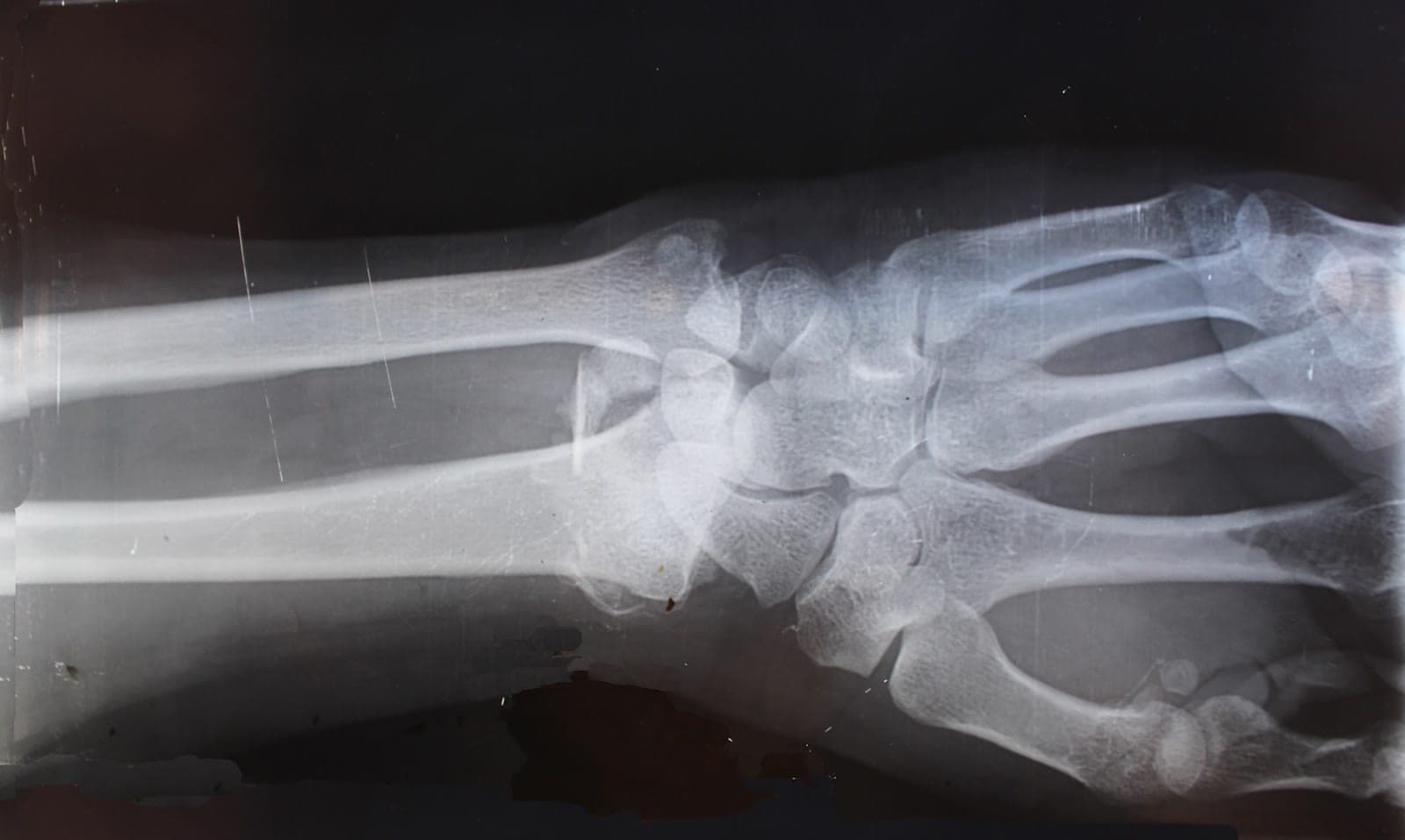
What treating early prevents
Erosions on a hand X-ray are a late finding
By the time damage is visible on a film it does not reverse. Everything above exists to reach the diagnosis before this picture has anything to show — which is why the first twelve weeks matter more than any single drug choice.
Your consultation
From first visit to stable disease
- 01
History & joint examination
Every symptomatic joint is examined and documented, along with skin, nails, eyes and systemic features that change the diagnosis.
- 02
Targeted investigation
Only the tests that answer a specific question — serology, inflammatory markers, imaging — plus safety screening before any immunosuppression.
- 03
Diagnosis explained plainly
What the condition is, what it is not, the realistic outlook, and what happens if it is left untreated. Questions are expected, not rushed.
- 04
Treat-to-target plan
A defined target with a defined review date. Medication, physiotherapy, bone protection and vaccination set out as one plan.
- 05
Structured follow-up
Reviews every 4–12 weeks until the target is reached, then longer intervals. Teleconsultation between in-person visits.
Patient feedback
What patients say
5.0 from 10 reviews
These are unedited excerpts from public reviews on the clinic’s Google Business Profile. Nothing here is written by the practice.
My experience with Dr. Abhijeet was truly exceptional!
Google review
Dr. Abhijit is very kind, patient, and knowledgeable.
Google review
The hospital is clean, well-maintained, and provides quality treatment.
Google review
The clinic
Where you will be seen
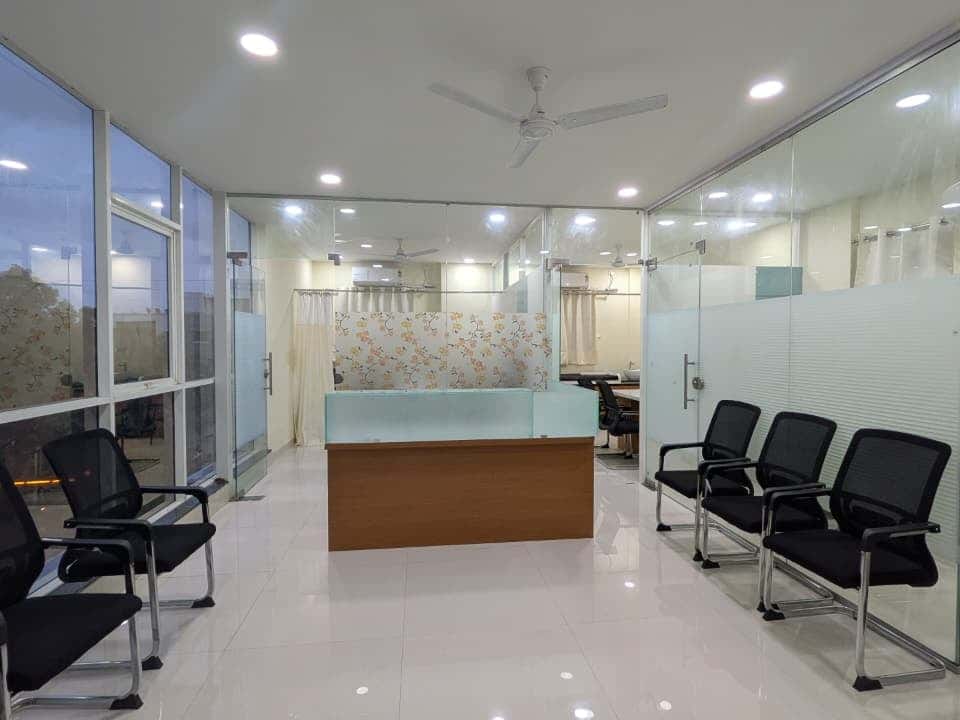
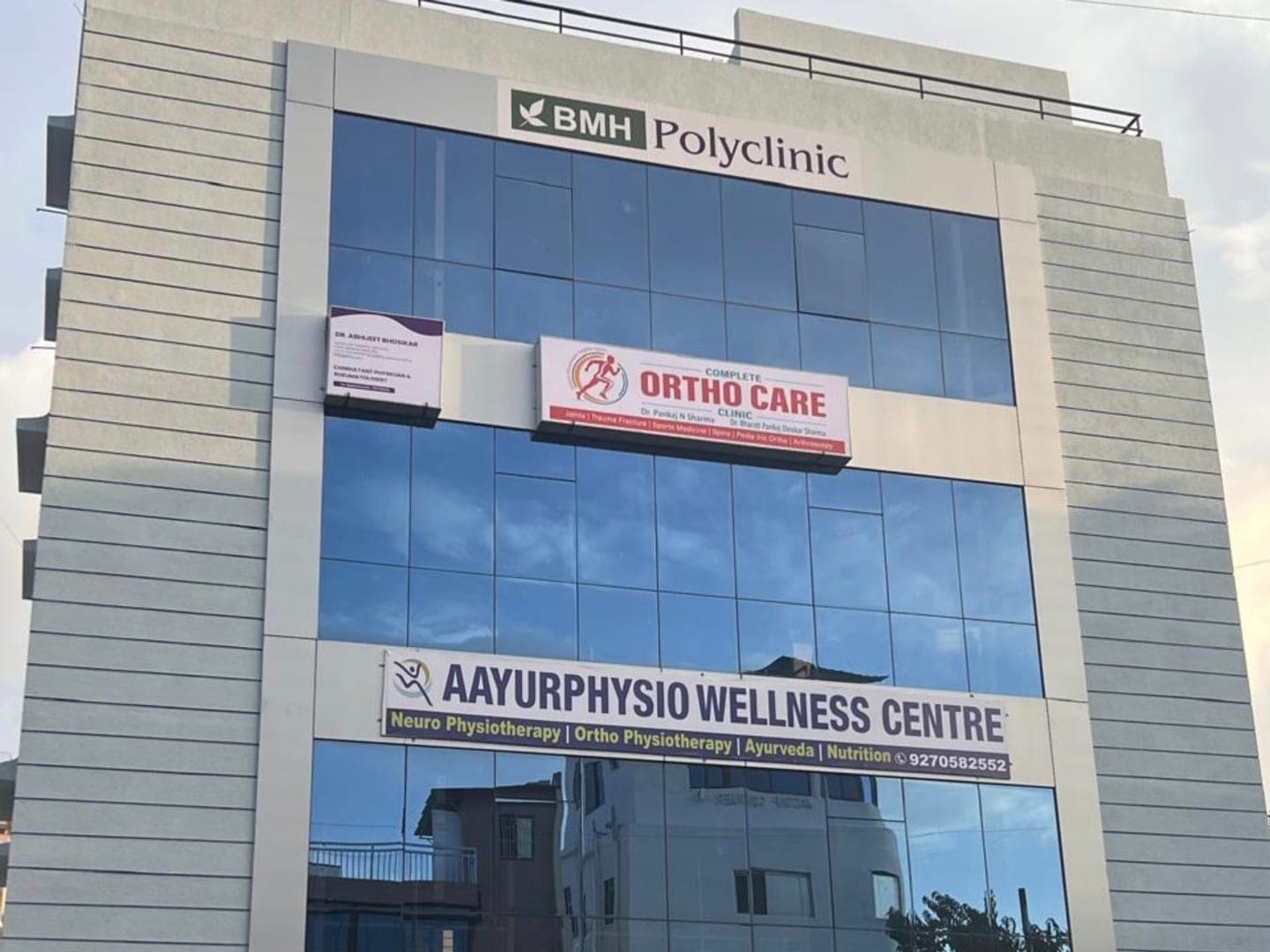
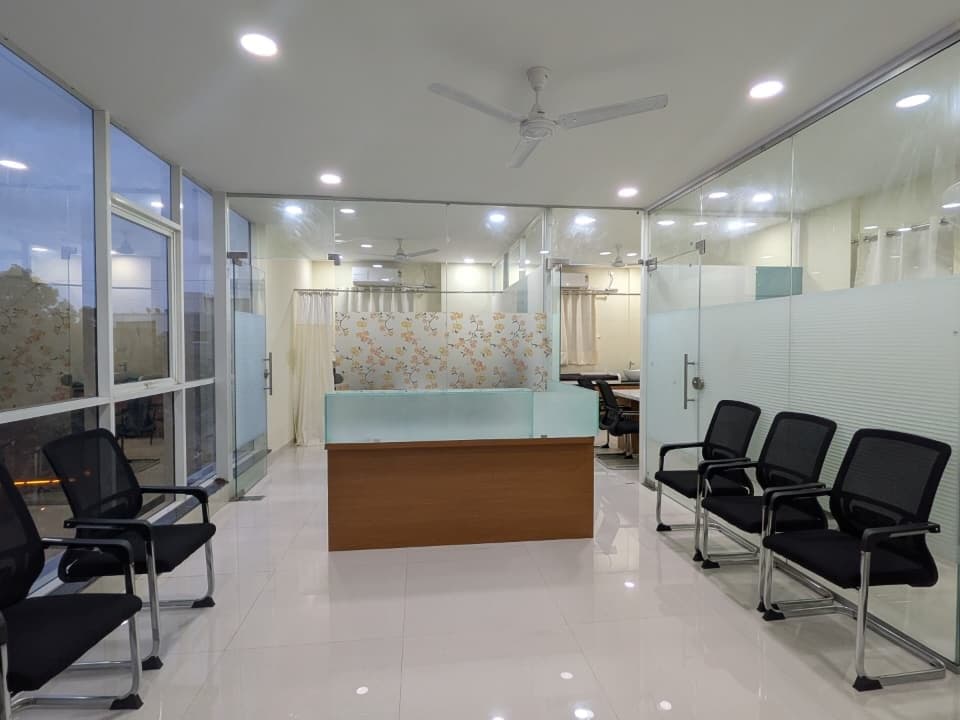
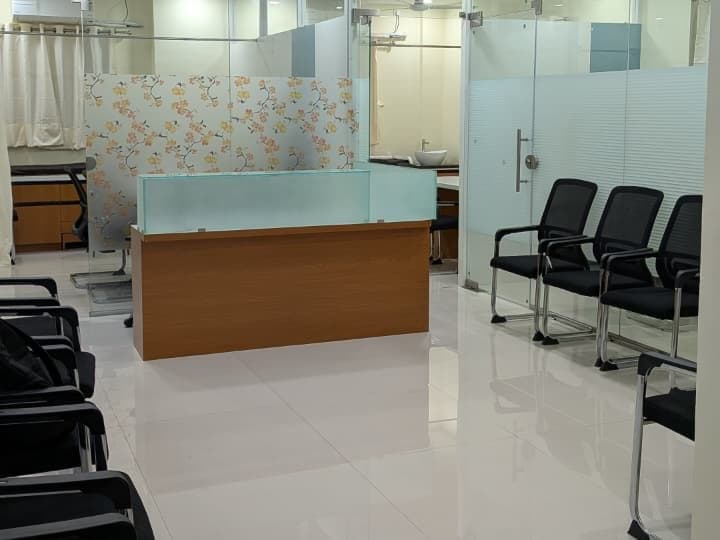
The rheumatology OPD is on the 3rd floor of BMH Polyclinic at Shinde Vasti Chowk in Ravet, behind Madhav Mithas.
Common questions
Questions patients ask before booking
If your question is not answered here, call the clinic or send a WhatsApp message. Reception can advise whether a rheumatology consultation is the right next step.
Where is Dr. Abhijeet Bhosikar's rheumatology clinic located?
When should I see a rheumatologist instead of an orthopaedic surgeon?
What should I bring to my first rheumatology consultation?
Do you offer teleconsultation for patients outside Pimpri-Chinchwad?
How long does rheumatology treatment take to work?
Is arthritis treatment expensive in India?
Do not wait out joint swelling. The earliest treatment works best.
Book a consultation at the Ravet clinic in Pimpri-Chinchwad — or arrange a teleconsultation if you are travelling from outside the city.